Old Batavia and the Dutch Empire

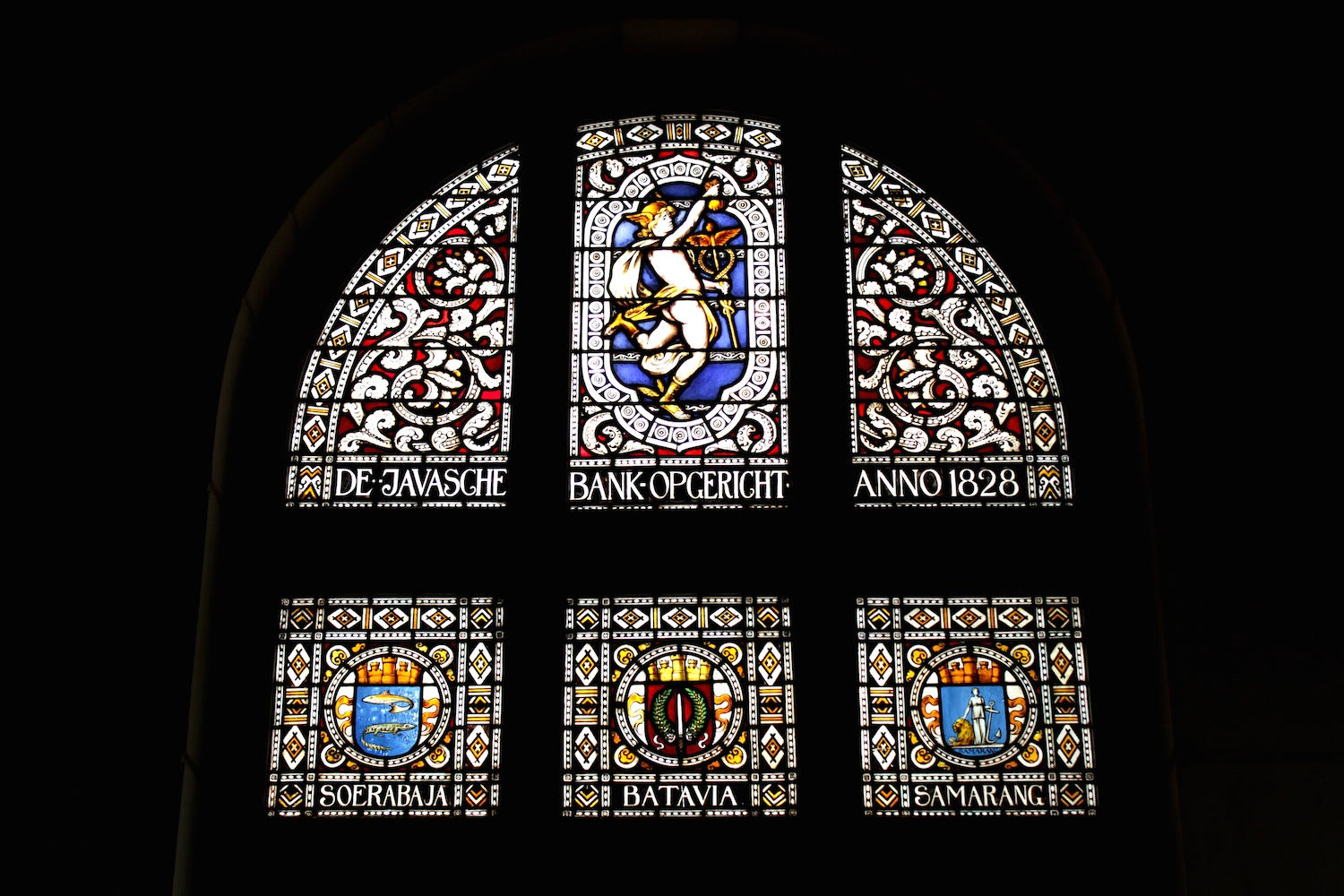
Stained Glass panel at the former De Javasche Bank (1828) in Kota Toea.  Today, it houses the Museum Bank Indonesia.

Stained Glass panel at the former De Javasche Bank (1828) in Kota Toea. Today, it houses the Museum Bank Indonesia.

At the recent book launch on 15 April 2015 at the Singapore Art Museum, I had the chance to highlight some of my favourite images from this Grand Tour project and why I thought they were special.

Here’s one of the images – a stained glass window in the former De Javasche Bank (Bank of Java) in Kota Toea – the old town of Jakarta, formerly known as Batavia.

The reason why this stained glass window is special is because it spoke eloquently of the guiding philosophy behind Dutch colonialism in Indonesia.

Note the image of the Roman God Mercury at the top of the window – this is symbolic for two reasons: the fact that it depicts a pagan god shows how the Dutch considered their new colony a kind of utopia – a new world.  At the same time, the fact that they depict a Roman God – and they were very generous with depictions of Roman gods and goddesses elsewhere in the bank and the city – suggests perhaps that they were themselves inheritors of Romans.

Or, to put it simply – they were the New Romans, out here in the Far East, creating a new Roman Empire.

Stained glass, as we all know, is also a religious form of art. In this case, the fact that stained glass was being used to depict motifs of Empire and Trade – the bottom half of the window presents the coats of arms of Batavia, Soerabaja and Semarang, the three largest port cities of the Dutch East Indies – suggests that TRADE was the new religion. OR, if one were to be a little more cynical, it could also be the Dutch solipsistically referring to themselves as the new GODS, creating a new world out here.

Finally, the third reason why this image spoke so movingly to me was because it suggested the existence of a whole different civilisation than ours, that has completely disappeared. It wasn’t so long ago that the Indische, or Dutch Europeans were living here – but today traces of them have been removed so systematically from the city that what remains feel – to me, at least – like relics from a lost civilisation.

Chancing upon this image was, in a sense, a kind of urban archaeology.

[The Romance of the Grand Tour – 100 Years of Travel in Southeast Asia is available now at all major bookstores in Singapore – Kinokuniya, Times and MPH – as well as at museum shops and the airport. As of mid-May, it will also be available at major bookstores across Southeast Asia and Hong Kong, at Waterstones and Blackwells in London, and on http://www.amazon.co.uk.]
 

Rangoon in the 1900s

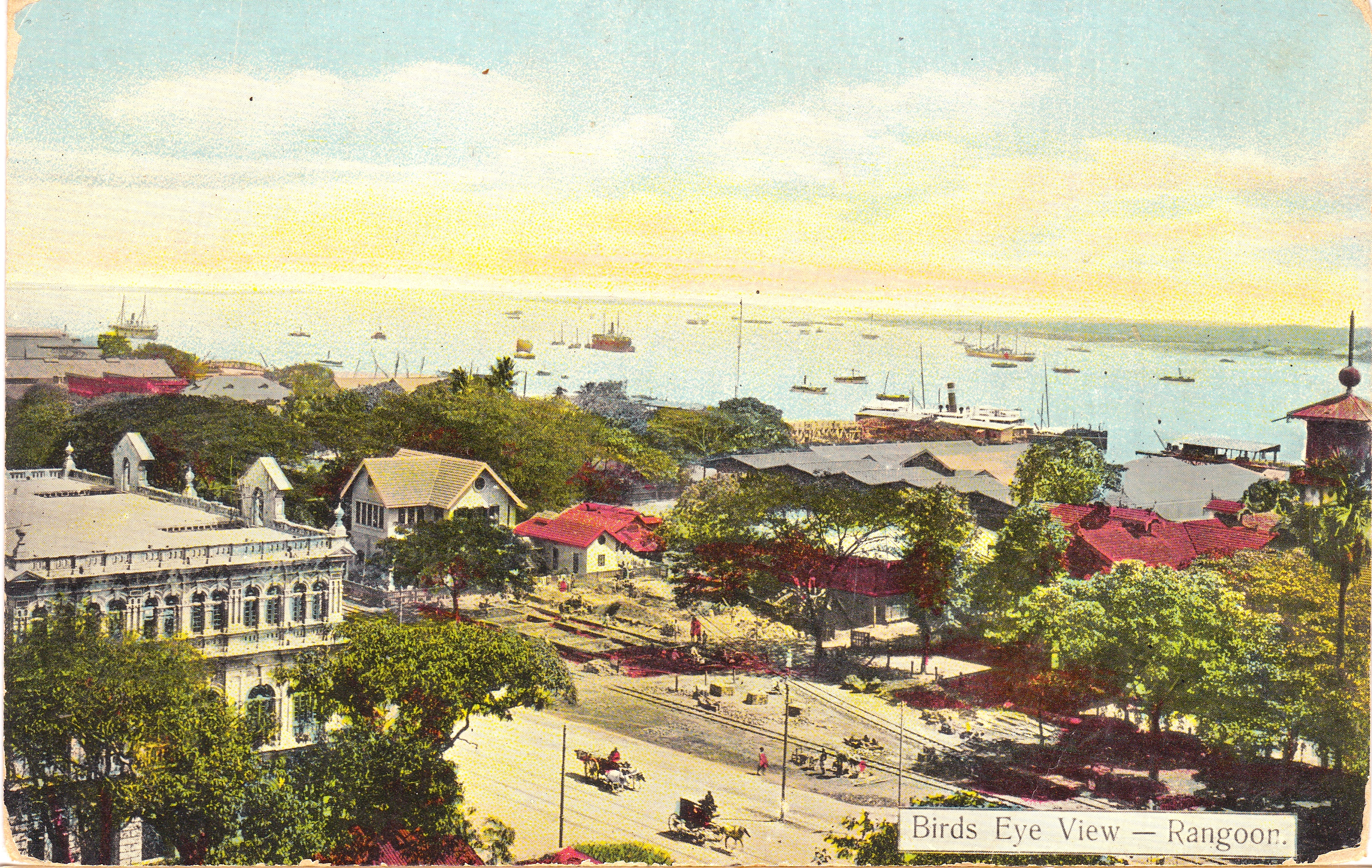
Bird's Eye View of Rangoon, early 1900s. Collection of the Author.

In the course of writing the Rangoon chapter, I managed, very fortunately, to acquire quite a few early 1900s vintage postcards that presented views of the city of Rangoon in British Burma – today’s Yangon, in Myanmar.

The first postcard above is a spectacular bird eye’s view in colour, of Strand Road and the Rangoon River. As you can see, Rangoon was a bustling port – in fact, it was perhaps the most important port in Southeast Asia proper, after Singapore.

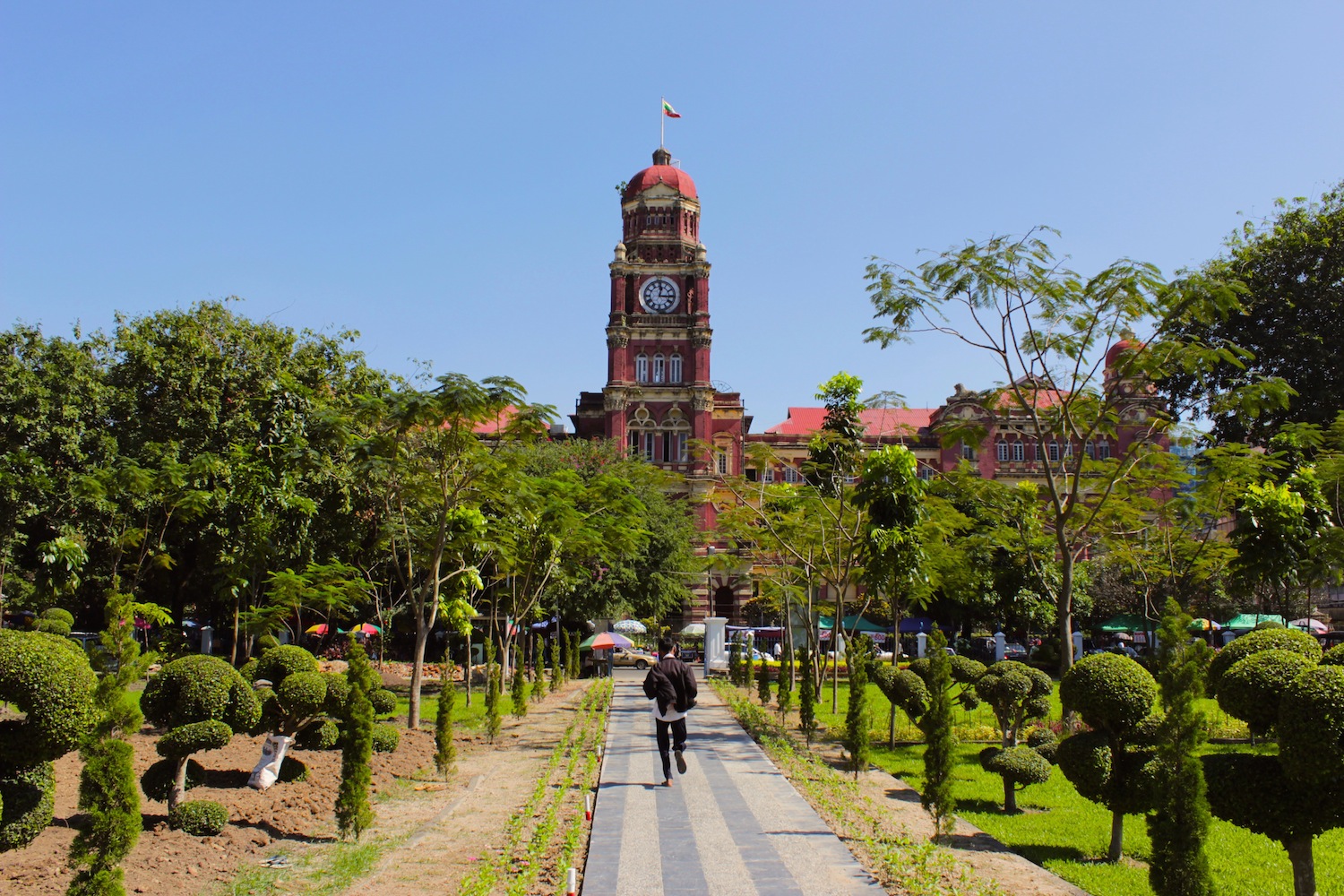
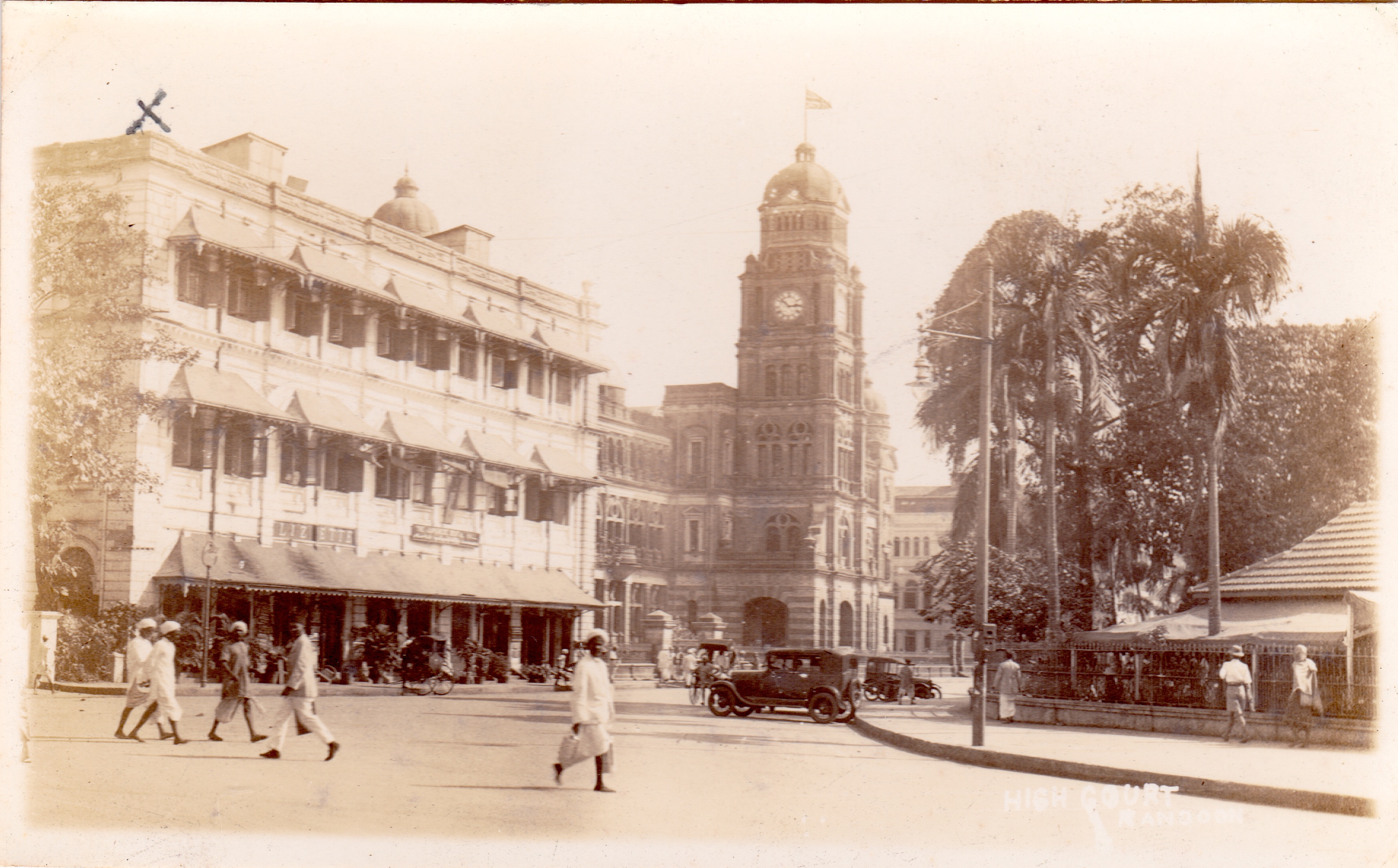
The second view, below, is that of the historic High Court Building (at centre), which still stands today. The building was built in 1914 in a distinctly Edwardian style, and wouldn’t feel out of place in London itself.

The wonderful thing about today’s Yangon downtown, is that it looks almost exactly the same as the Rangoon presented in these vintage postcards.  All the amazing monumental architectural heritage still stands, and there is a race against time to preserve and restore many of these.

The first chapter of The Romance of the Grand Tour – 100 Years of Travel in Southeast Asia takes the reader on a stroll through the old town of Rangoon/Yangon in the 1900s and today, presenting views and vistas from the turn of the 19th century and the turn of the 20th century.

The Romance of the Grand Tour – 100 Years of Travel in Southeast Asia will be available from mid-April in all major bookstores, museum shops and featured hotels in Singapore, the Southeast Asian region and Hong Kong. 

Rangoon City View with the High Court at centre. Collection of the Author.

Rangoon City View with the High Court at centre. Collection of the Author.

The High Court Building today.

The High Court Building today.

Raffles Place, Singapore: Then and Now

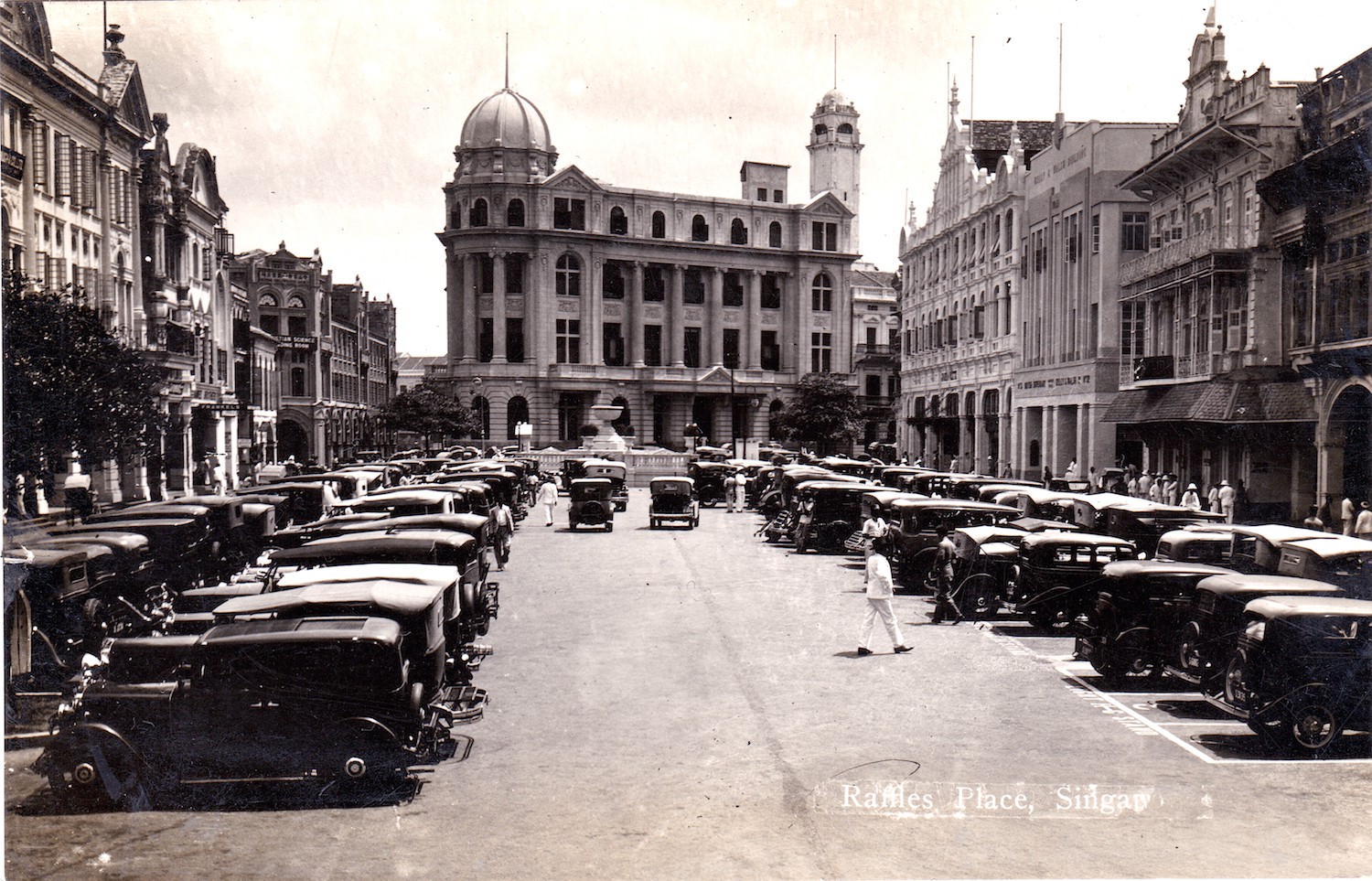
Singapore - Raffles Place in the 1930s.

Singapore: Raffles Place in the 1930s.

In the spirit of national mourning for the late Mr Lee Kuan Yew, the founding father of Singapore, I kick off this blog with a post on the city Mr Lee built, which also happens to be my city.

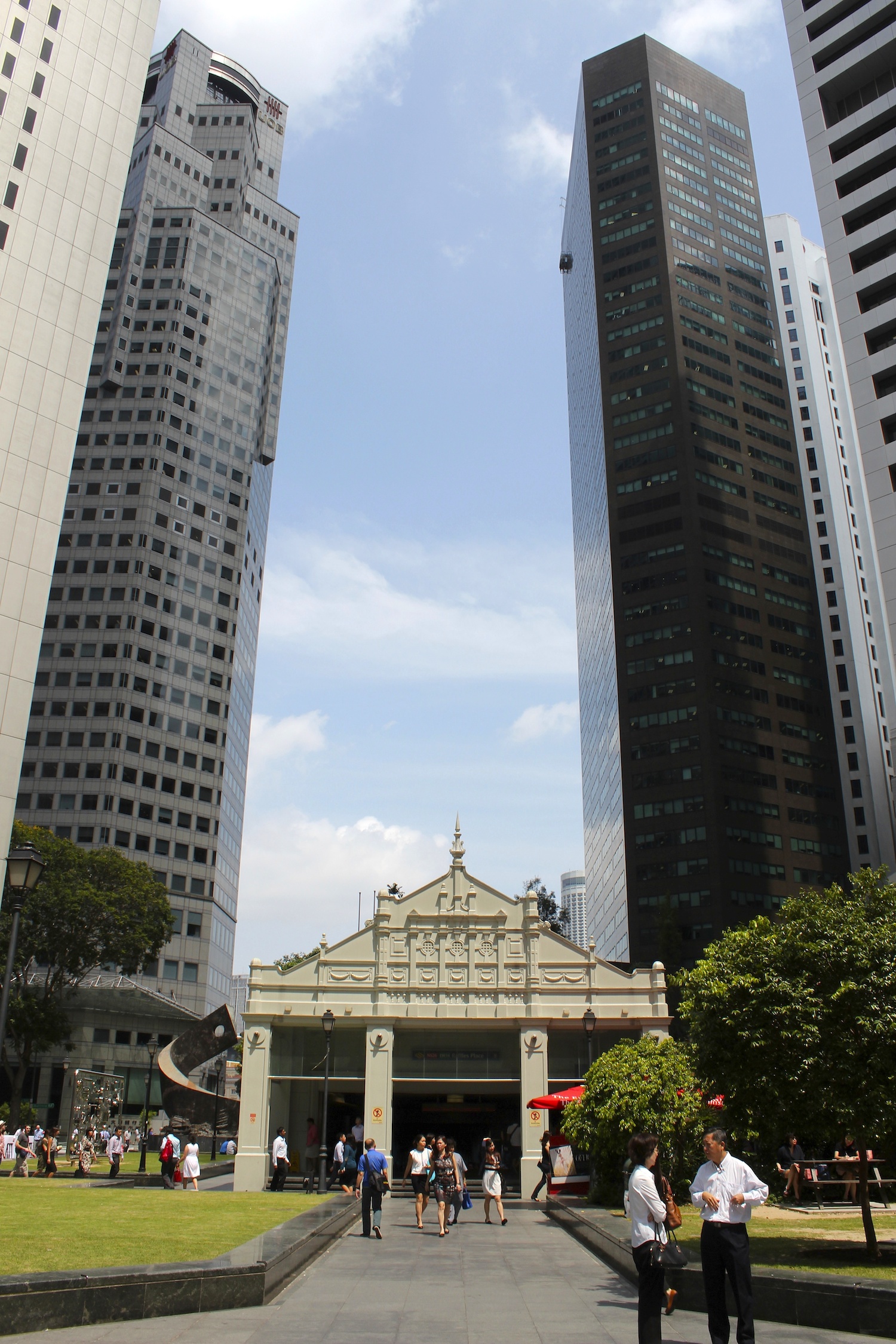
The photos present Raffles Place in the 1930s and today – and they demonstrate starkly and eloquently Mr Lee Kuan Yew’s legacy, as well as the phenomenal growth of Singapore from a colonial entrepot to today’s global trade and financial hub.

Raffles Place is the commercial heart of Singapore.  Known as Commercial Square in the 1820s, it was renamed in 1858 after the (British colonial) founder of Singapore, Sir Thomas Stamford Raffles; and it has held that name every since.

Throughout much of the 1900s, it was the centre of the major trading and banking corporations in the world, including the Standard Chartered Bank and the Hong Kong and Banking Corporation.  It was also the centre of retail, housing the premises of premiere departmental stores, Robinsons & Co. and John Little & Co., both of which still operate today.

The photo on top shows the Chartered Bank of India, Australia and China building (the forerunner to Standard Chartered), with its distinctive dome and Neo-Classical architecture, at centre.  Immediately to the right is the John Little & Co. departmental store building, erected in an Ibero-Moorish style.

The photo below captures almost the exact same view, with the Standard Chartered Bank building standing exactly where it used to stand, but replaced by a towering, brown skyscraper.  At centre is the entrance to the Raffles Place MRT Station – MRT being Singapore’s underground public rail system – built to recall the facade of John Little & Co.

The Romance of the Grand Tour – 100 Years of Travel in Southeast Asia will be available after April 15, 2015 at all major bookstores and featured hotels in Southeast Asia and Hong Kong, major museums in Singapore and on http://www.amazon.co.uk.  

Singapore - Raffles Place Today

Singapore: Raffles Place today.