The Eastern & Oriental Hotel, Penang

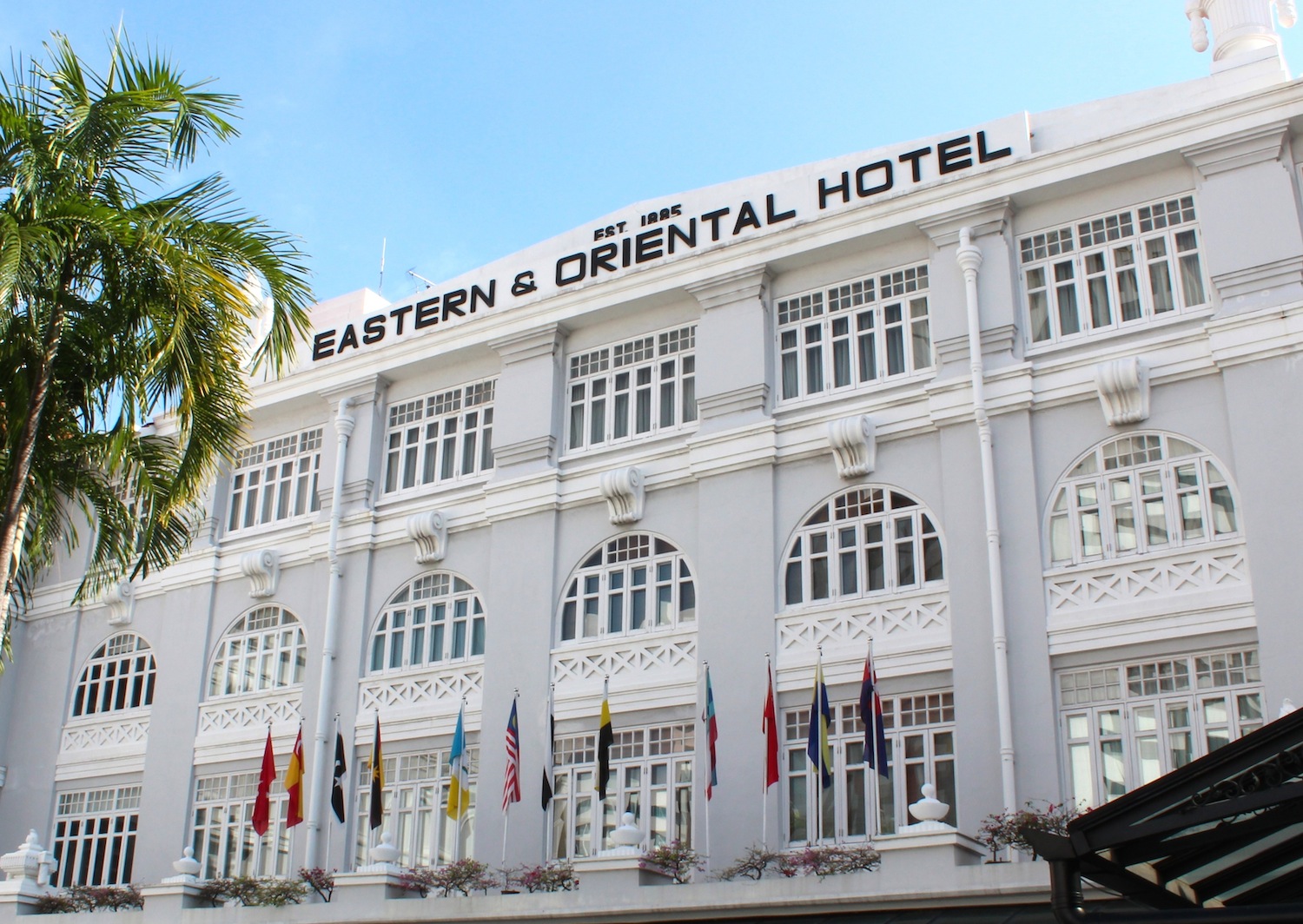
The Facade of the Eastern & Oriental Hotel (built in 1885) today.

The Facade of the Eastern & Oriental Hotel (built in 1885) today.

In Penang, stay at the Eastern & Oriental Hotel – the grande dame of the city’s hospitality scene since 1885, when it was established by the illustrious Sarkies Brothers. This is the sister hotel to the Raffles Hotel in Singapore and the Strand Hotel in Rangoon, and a close cousin to the present Hotel Majapahit in Surabaya.

In its time, The E & O – as it is familiarly known to Penangites – played host to nobility and heads of state as well as literary and cinematic greats, such as British authors Somerset Maugham and Rudyard Kipling and American movie stars Charlie Chaplin and Douglas Fairbanks.

The E & O is the second stop on our Grand Tour of Southeast Asia. Period postcard views from the early 1900s, and photographs from today show that it hasn’t changed much in spirit and ambience in 100 years, though of course, the E & O today has all the fittings of a modern hotel – in particular its swimming pool set right by sea along the hotel’s seafront promenade.

Be sure to opt for one of the sea-facing suites with attached balcony, if only to wake up to spectacular views of the Malacca Straits and the ships bringing cargo from afar, exactly like they have done so for two centuries.

The Romance of the Grand Tour – 100 Years of Travel in Southeast Asia will be available from 15 April onwards at all major bookstores in Southeast Asia and Hong Kong, as well as at hotels featured in the book.  It will also be available online at http://www.amazon.co.uk.
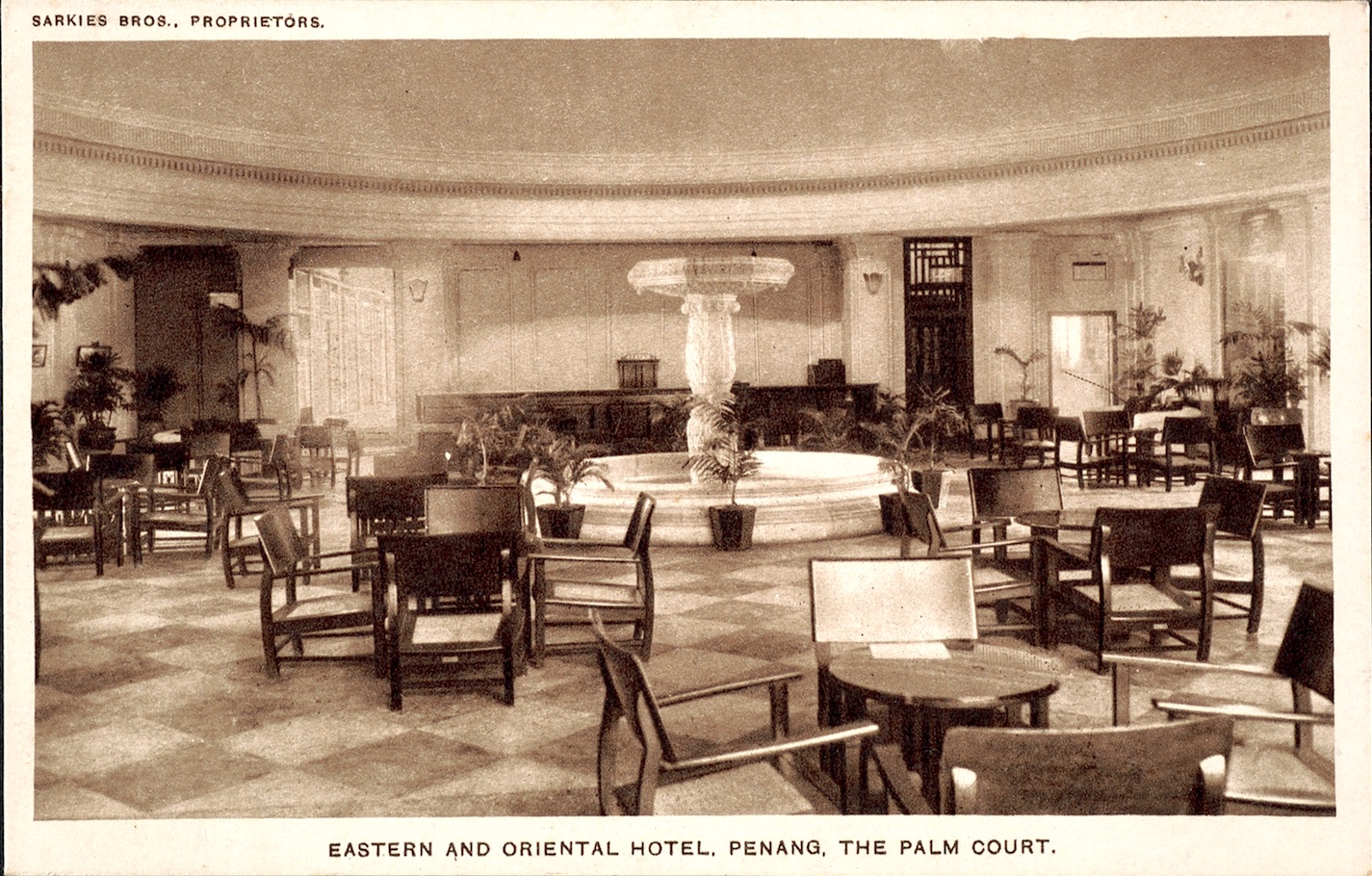
1900s view of the famous Palm Court, with its fountain and whispering dome (guests seated underneath the dome could hear conversations occuring across the room).

1900s view of the famous Palm Court, with its fountain and whispering dome (guests seated underneath the dome could hear conversations occuring across the room).

1900s view of the E & O's back-lawn facing the Malacca Straits, and its Victory Annexe.

1900s view of the E & O’s back-lawn facing the Malacca Straits, and its Victory Annexe.

The E & O's back-lawn was turned into a swimming pool in the '50s and remains so today.

The E & O’s back-lawn was turned into a swimming pool in the ’50s and remains so today.
Rangoon in the 1900s

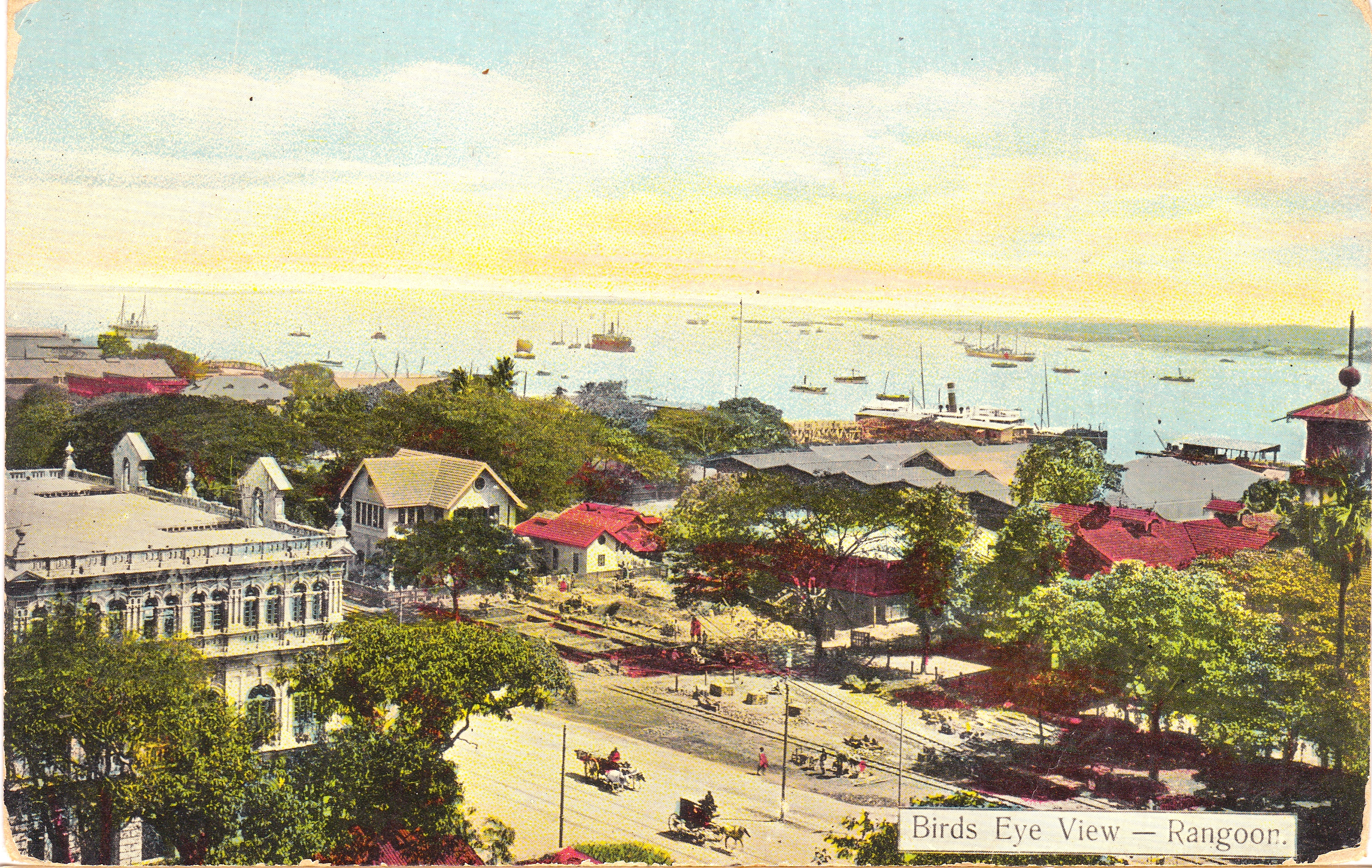
Bird's Eye View of Rangoon, early 1900s. Collection of the Author.

In the course of writing the Rangoon chapter, I managed, very fortunately, to acquire quite a few early 1900s vintage postcards that presented views of the city of Rangoon in British Burma – today’s Yangon, in Myanmar.

The first postcard above is a spectacular bird eye’s view in colour, of Strand Road and the Rangoon River. As you can see, Rangoon was a bustling port – in fact, it was perhaps the most important port in Southeast Asia proper, after Singapore.

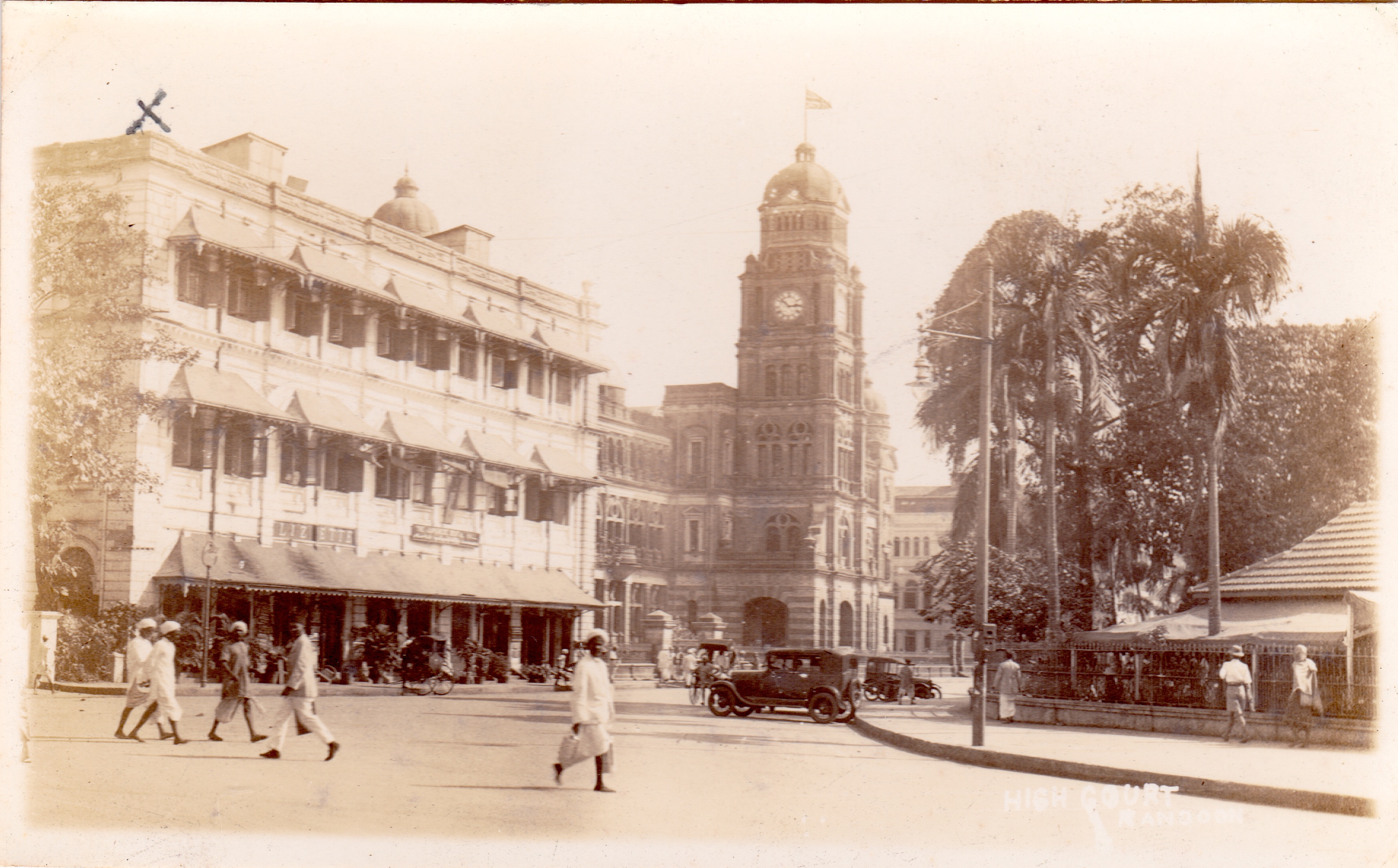
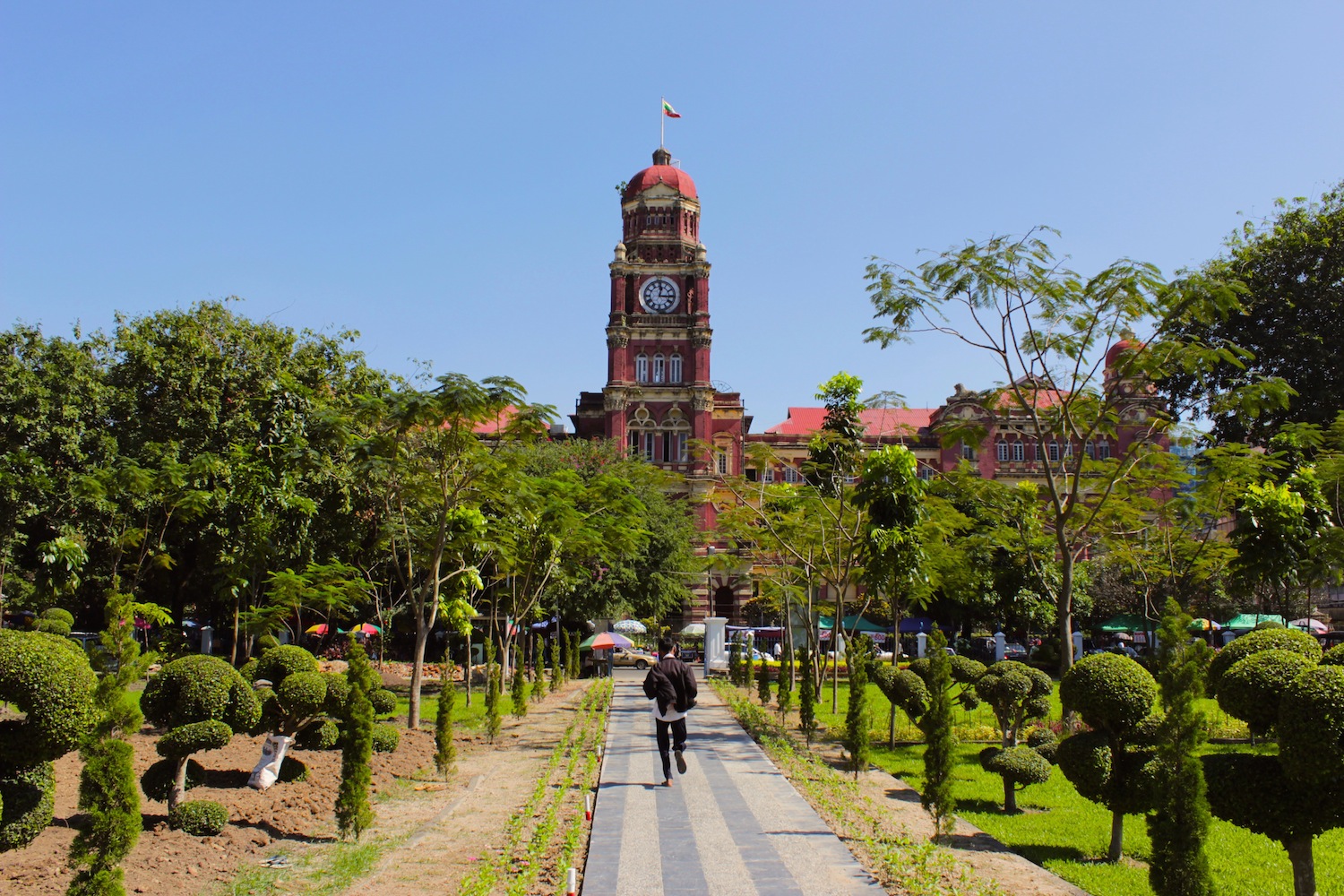
The second view, below, is that of the historic High Court Building (at centre), which still stands today. The building was built in 1914 in a distinctly Edwardian style, and wouldn’t feel out of place in London itself.

The wonderful thing about today’s Yangon downtown, is that it looks almost exactly the same as the Rangoon presented in these vintage postcards.  All the amazing monumental architectural heritage still stands, and there is a race against time to preserve and restore many of these.

The first chapter of The Romance of the Grand Tour – 100 Years of Travel in Southeast Asia takes the reader on a stroll through the old town of Rangoon/Yangon in the 1900s and today, presenting views and vistas from the turn of the 19th century and the turn of the 20th century.

The Romance of the Grand Tour – 100 Years of Travel in Southeast Asia will be available from mid-April in all major bookstores, museum shops and featured hotels in Singapore, the Southeast Asian region and Hong Kong. 

Rangoon City View with the High Court at centre. Collection of the Author.

Rangoon City View with the High Court at centre. Collection of the Author.

The High Court Building today.

The High Court Building today.

Raffles Place, Singapore: Then and Now

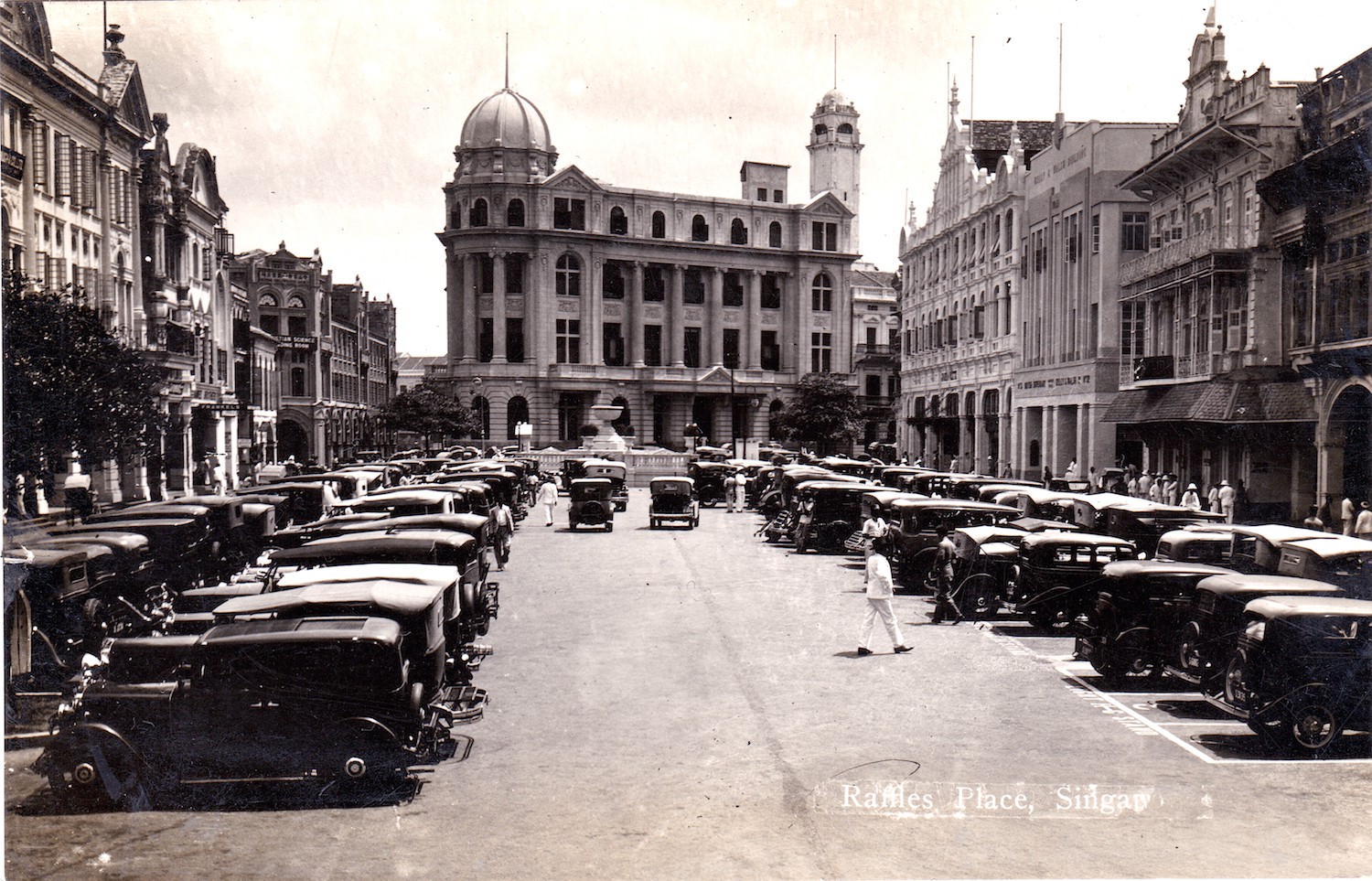
Singapore - Raffles Place in the 1930s.

Singapore: Raffles Place in the 1930s.

In the spirit of national mourning for the late Mr Lee Kuan Yew, the founding father of Singapore, I kick off this blog with a post on the city Mr Lee built, which also happens to be my city.

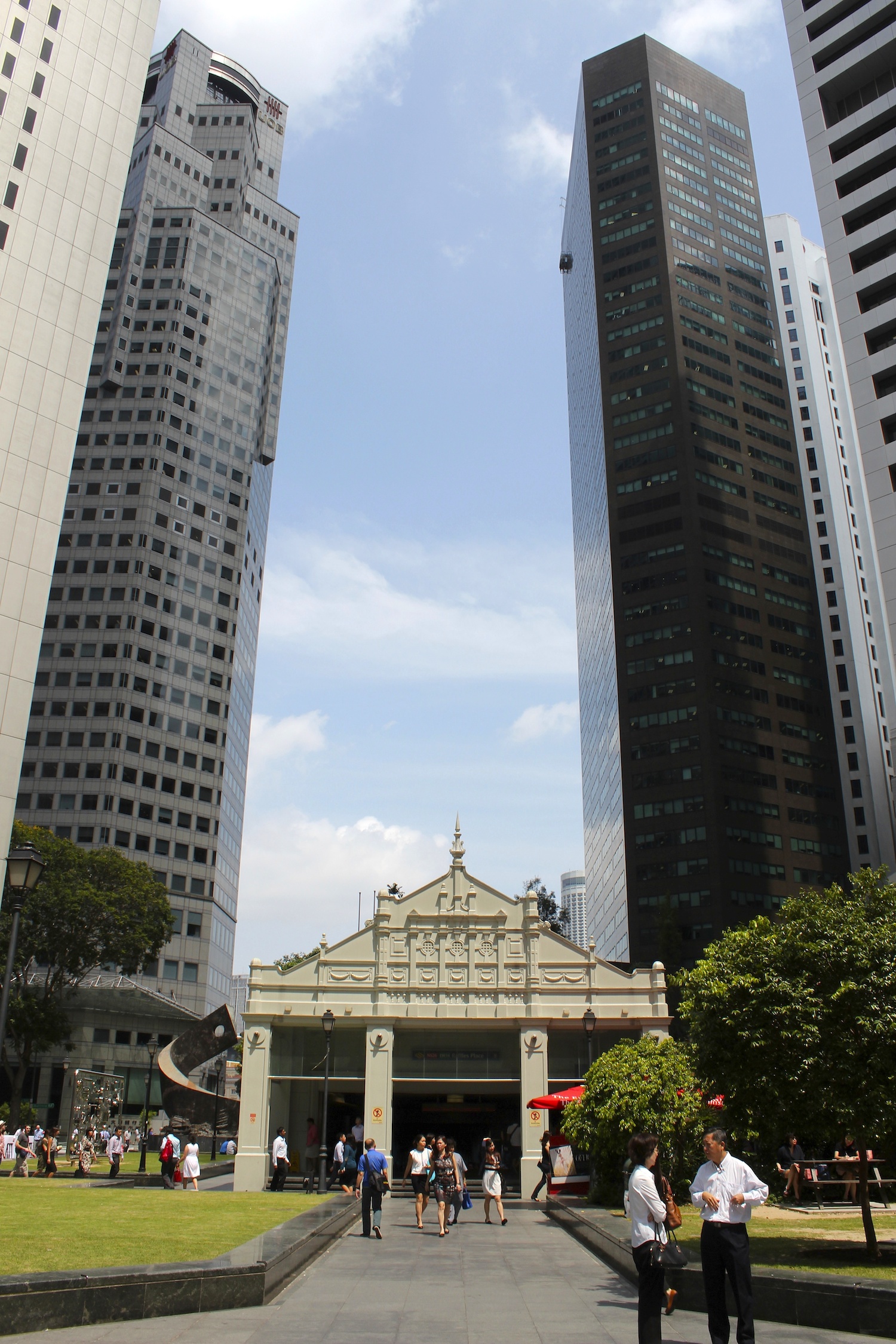
The photos present Raffles Place in the 1930s and today – and they demonstrate starkly and eloquently Mr Lee Kuan Yew’s legacy, as well as the phenomenal growth of Singapore from a colonial entrepot to today’s global trade and financial hub.

Raffles Place is the commercial heart of Singapore.  Known as Commercial Square in the 1820s, it was renamed in 1858 after the (British colonial) founder of Singapore, Sir Thomas Stamford Raffles; and it has held that name every since.

Throughout much of the 1900s, it was the centre of the major trading and banking corporations in the world, including the Standard Chartered Bank and the Hong Kong and Banking Corporation.  It was also the centre of retail, housing the premises of premiere departmental stores, Robinsons & Co. and John Little & Co., both of which still operate today.

The photo on top shows the Chartered Bank of India, Australia and China building (the forerunner to Standard Chartered), with its distinctive dome and Neo-Classical architecture, at centre.  Immediately to the right is the John Little & Co. departmental store building, erected in an Ibero-Moorish style.

The photo below captures almost the exact same view, with the Standard Chartered Bank building standing exactly where it used to stand, but replaced by a towering, brown skyscraper.  At centre is the entrance to the Raffles Place MRT Station – MRT being Singapore’s underground public rail system – built to recall the facade of John Little & Co.

The Romance of the Grand Tour – 100 Years of Travel in Southeast Asia will be available after April 15, 2015 at all major bookstores and featured hotels in Southeast Asia and Hong Kong, major museums in Singapore and on http://www.amazon.co.uk.  

Singapore - Raffles Place Today

Singapore: Raffles Place today.

Steamships, Grand Hotels and Port Cities in Southeast Asia

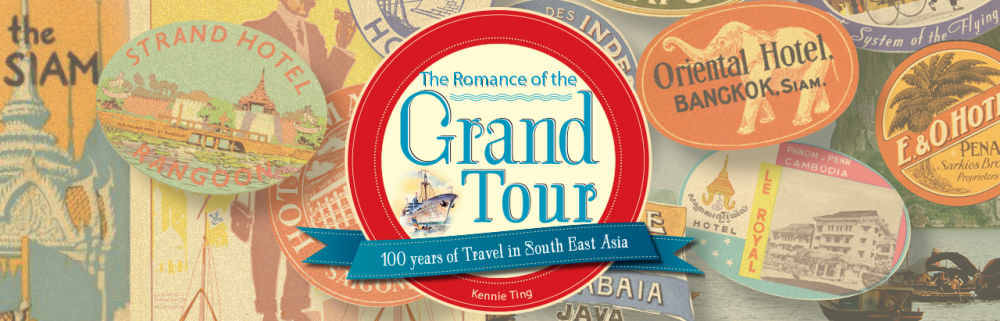
The Romance of the Grand Tour

Dear Readers,

After two and a half years of working on this, my new book, The Romance of Grand Tour – 100 Years of Travel in Southeast Asia is finally to be launched on 15th April, 2015 in my home city of Singapore.

It is a new coffee table book celebrating the Grand Tour of Southeast Asia in the 1920s. Retracing the journey of those grand tourists of the ‘20s, the book takes today’s traveller through 12 fabled port cities in what was then known as the East Indies.

Setting sail from Rangoon (Yangon), we visit Penang, Malacca, Singapore, Batavia (Jakarta), Surabaya, Bangkok, Saigon (Ho Chi Minh City), Phnom Penh, Hanoi and Manila before disembarking at Hong Kong harbour.

Each chapter presents a historical and photographic overview of the city’s old town, colonial precincts and living cultural heritage, drawing on archival images, maps and accounts, as well as contemporary photos.

In each city, we also stop at the city’s grand colonial hotel – the Raffles Hotel in Singapore, the Peninsula Hotel in Hong Kong, the Eastern & Oriental Hotel in Penang and the Hotel Metropole in Hanoi, to name a few. 

As part of the on-going marketing and publicity campaign for the book, I am starting this new blog, where in the course of the year, I shall be posting images, photographs, maps and quotes from my book; interesting stories related to the “making of” the book; book events in the region, AND – as a plus – images, quotes, bits of history that are related to the history of travel, or to the 12 port cities in my book, but which did not make it into the “final cut.”

Welcome on board ship… and to a year of history, nostalgic and excitement!

Sincerely,

Kennie Ting